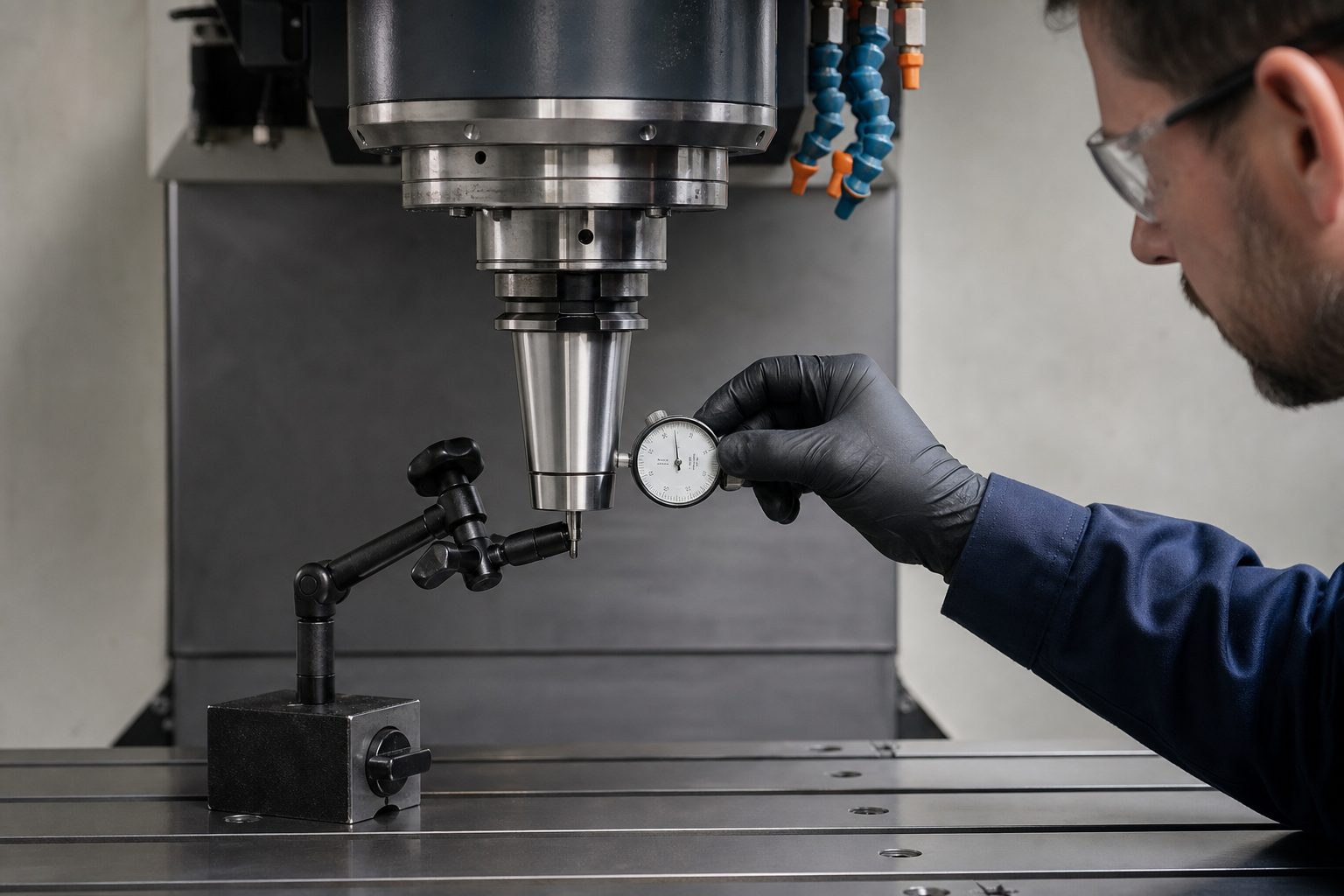
Baseline means repeatable context
A temperature or vibration value has limited meaning without the same speed, warm-up state, tool interface, measurement location and ambient conditions. The first goal is not a universal “good” number. It is a repeatable method that reveals change on this machine.
Start with non-invasive observations
Record warm-up behaviour, unusual sound, displayed spindle load and temperature at defined locations. Use the same operating steps each time. Stop if the machine shows unsafe vibration, noise, heat, lubrication alarms or other signs requiring isolation.
Check the interface before blaming the spindle
Clean and inspect the taper, holder and retention surfaces according to machine documentation. Tool balance, damaged holders, pull-stud condition and contamination can alter sound, finish and measured runout. Keep tooling observations separate from spindle observations.
Trend, do not cherry-pick
Record date, operating hours where available, test speed, duration, instrument and measurement point. A small series under consistent conditions is more useful than a single impressive-looking reading. Compare change with recent crashes, tooling changes, maintenance and production demands.
Know the limit of field checks
Basic observations can support maintenance decisions, but they do not replace specialised vibration analysis, geometry checks or manufacturer-defined test procedures when those are required. Document uncertainty and escalate rather than forcing a conclusion.
Prepare the next conversation
When the machine condition remains uncertain, preserve the evidence and create a concise request. Include only information you can verify, distinguish observations from assumptions, and identify any unsafe or isolated state clearly.