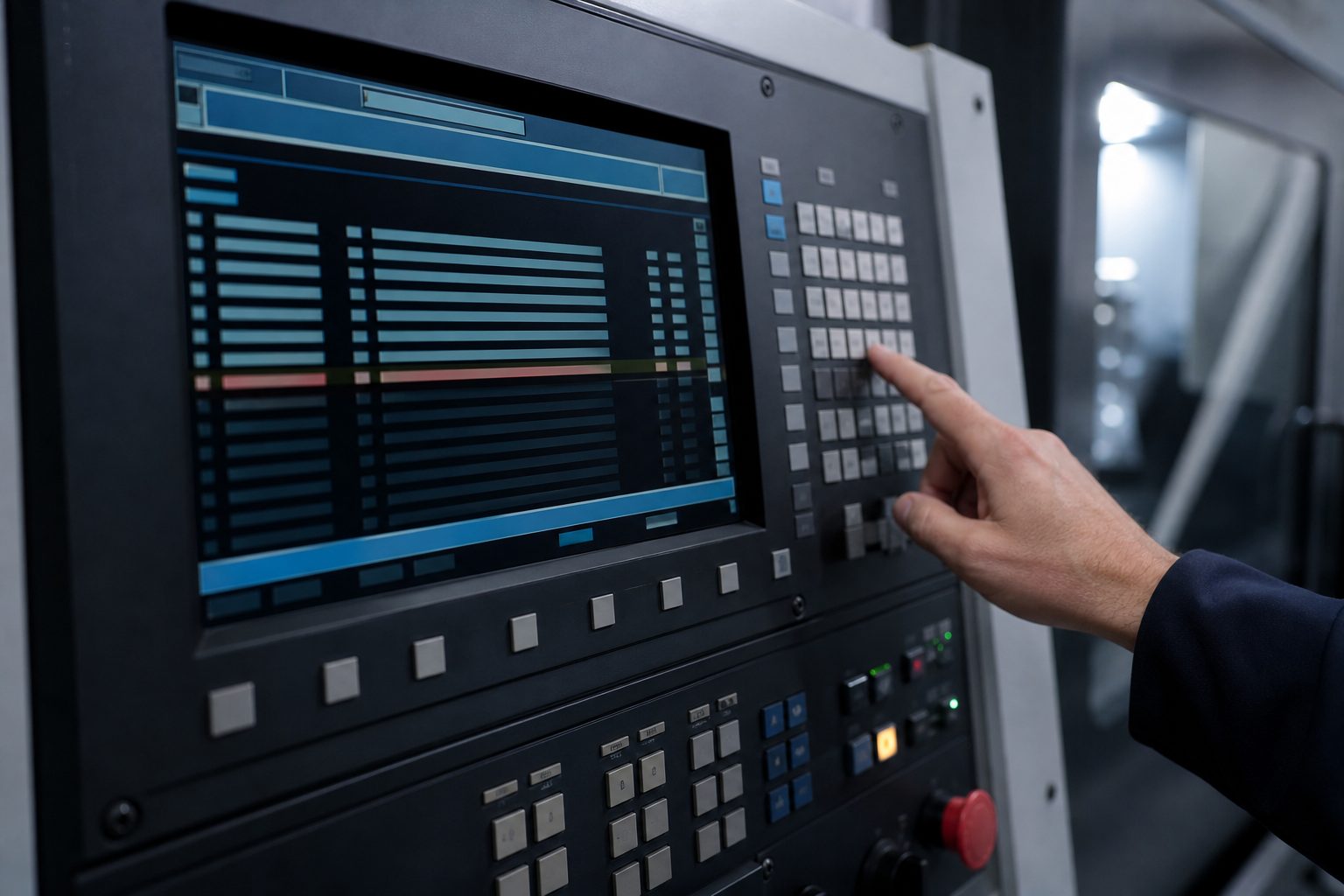
An alarm is a timestamp, not a diagnosis
A displayed code tells you that a monitored condition crossed a rule at a particular moment. It does not automatically identify the failed component. The same servo alarm may follow excess mechanical load, unstable supply, feedback trouble, a drive fault or an earlier interlock. Treat the code as an entry point into a sequence.
Before touching reset
Photograph the full display and record the active program, mode, selected tool, commanded operation and axis positions if safely visible. Note whether the fault appeared during acceleration, cutting, tool change, homing or idle. Listen for abnormal sound only from a safe position; never defeat a guard to gather evidence.
Build a short timeline
Write the last normal event, the first unusual event and everything the operator did afterward. Check the alarm history against this timeline. A secondary alarm can be more visible than the initiating one, especially when several subsystems stop together.
Use one controlled change at a time
After safe isolation and inspection, change only one relevant condition before retesting. Record that change and the result. Random resets, parameter edits and parts swaps create new variables and can conceal the original fault.
The best alarm note lets another technician reconstruct the machine state without standing at the panel.
Escalate with context
A useful service request contains exact alarm text, control family, machine category, sequence position, repeatability and recent work. Include photographs where they clarify labels or connections, but keep them framed so component location is obvious.
Prepare the next conversation
When the machine condition remains uncertain, preserve the evidence and create a concise request. Include only information you can verify, distinguish observations from assumptions, and identify any unsafe or isolated state clearly.