Begin with function and location
State what the component does, where it is fitted and which machine symptom led to the request. A loose part number without machine context can match a family while missing a critical revision, connector, voltage or firmware condition.
Capture identifiers exactly
Photograph the complete label square-on, then transcribe manufacturer text, part number, serial or lot identifier, revision and electrical ratings. Preserve spaces, hyphens and suffixes. Add a wider photograph showing mounting and nearby connections.
Record every interface
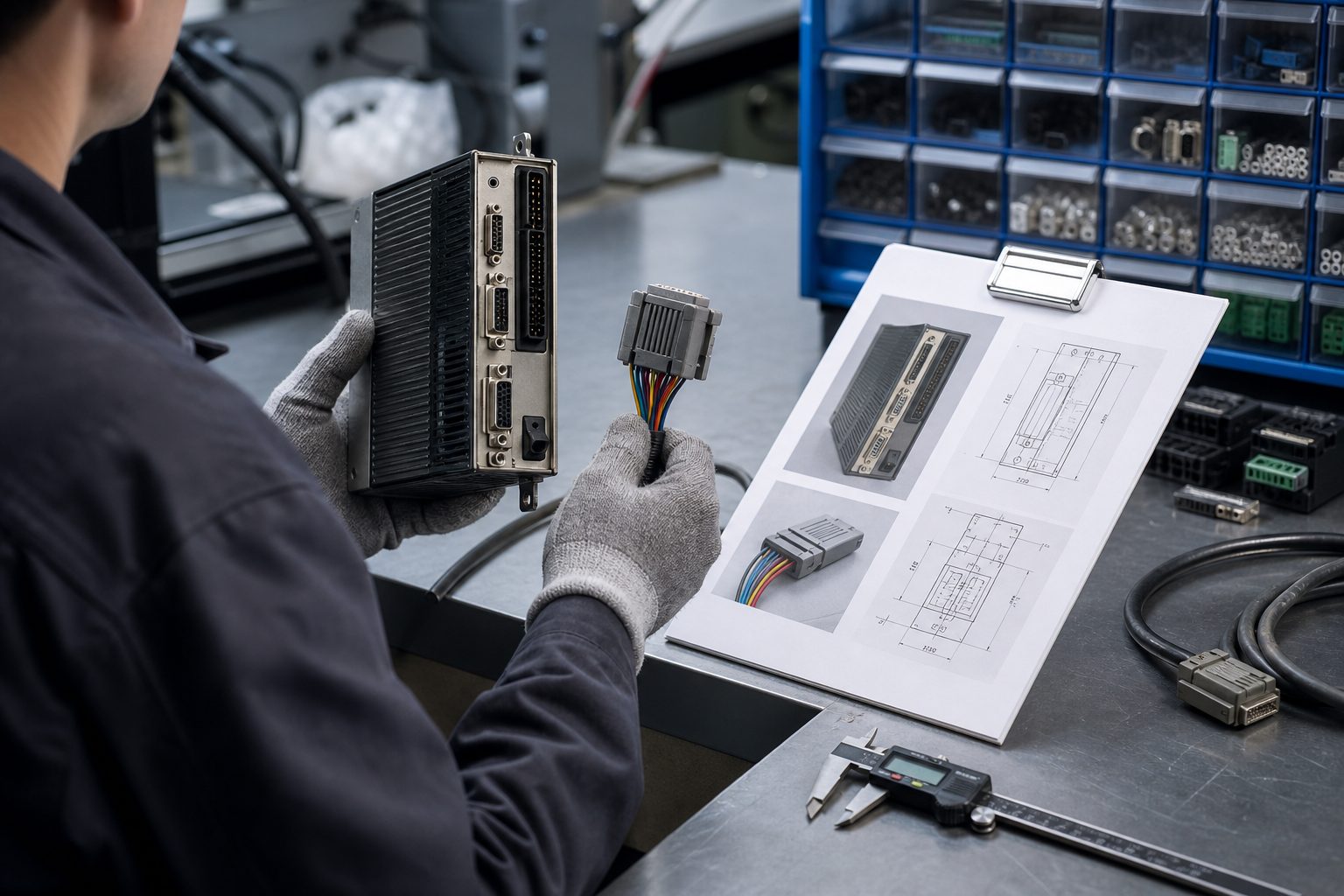
Count connectors and pins without disconnecting live equipment. Note keying, cable orientation, shaft dimensions, mounting pattern, cooling arrangement and communication interface where known. For mechanical items, record dimensions with the measurement method and units.
Verify substitution risk
A superseding item may require parameter changes, adapters, firmware compatibility or commissioning steps. “Looks the same” is not acceptance evidence. Ask what documentation supports interchangeability and what return conditions apply if compatibility cannot be proven.
Keep traceability at installation
Record the installed identifier, source documentation, settings changed, backups made and the functional checks completed. Retain the removed component until the machine is stable and the replacement record is complete.
Prepare the next conversation
When the machine condition remains uncertain, preserve the evidence and create a concise request. Include only information you can verify, distinguish observations from assumptions, and identify any unsafe or isolated state clearly.