CONTROL DIAGNOSTICS.
Structured control-side investigation for alarms, I/O conflicts, interlock chains and inconsistent machine behaviour.
Find the constraint. Protect the machine.
Structured control-side investigation for alarms, I/O conflicts, interlock chains and inconsistent machine behaviour.
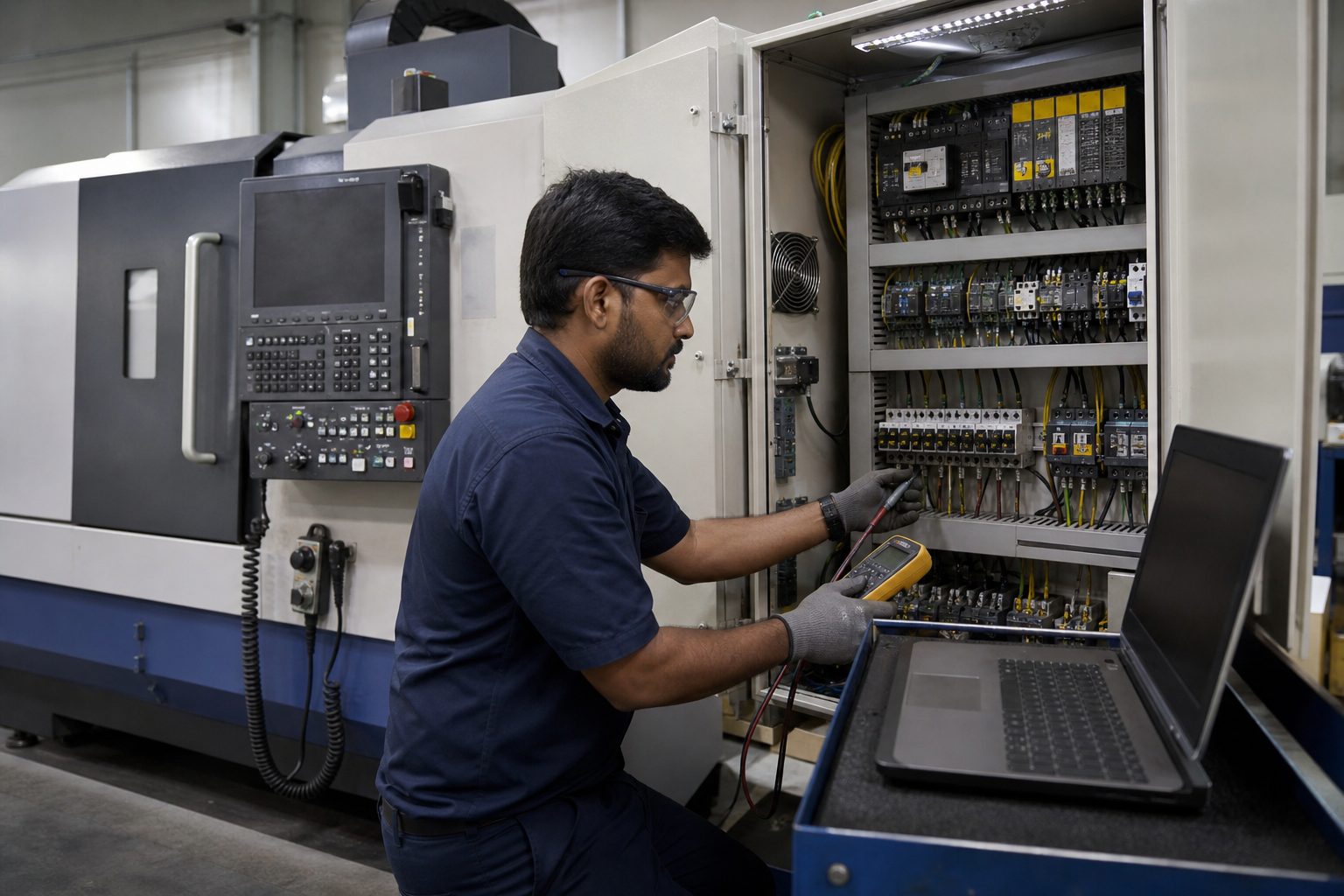
How the work is approached
Preserving evidence prevents a useful fault trail from disappearing after a reset or power cycle.
The investigation narrows from observed behaviour to likely systems without guessing at components.
The machine is checked against an agreed outcome, with residual risks and follow-up work recorded.
Useful information before a visit
Record the machine category, control family shown on the panel, exact alarm text, axis or spindle involved, and what changed before the symptom appeared. Keep photographs of labels and connectors in context. Do not bypass a guard, interlock or protective device to gather more information.
What a practical handover should contain
A useful service handover distinguishes observations from conclusions. It identifies checks completed, settings or components changed, the operating state at handover, and any limits that remain. Where further parts or specialist work are needed, the next step should be specific enough to act on.